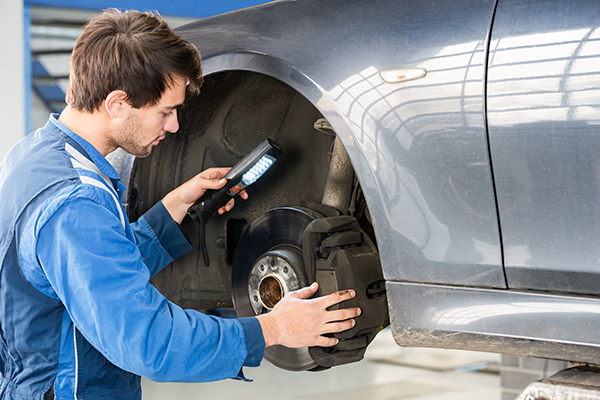
Cold, wet fall weather puts more attention on your brakes because traction is already reduced. Rain, damp pavement, falling temperatures, and longer stopping distances leave less room for a brake system that is worn, sticking, or not applying evenly.
We would rather find those problems before the weather gets worse. A brake issue that feels minor on a dry afternoon can become much more noticeable on a cold, rainy morning. These five problems are worth taking care of before fall turns into winter.
1. Brake Pads That Are Getting Too Thin
Brake pads wear a little every time you slow the vehicle. Once the friction material gets low, less material is left to handle repeated stops and heat.
At our shop, we measure pad thickness and compare the inner and outer pads on both sides of the axle. One pad can be much thinner than the one you can easily see through the wheel. If the pads are already close to their replacement point before colder weather arrives, waiting until they grind usually turns a smaller brake service into a more expensive one.
2. Rotors That Are Rusted, Grooved, or Uneven
Brake rotors need a reasonably flat, solid surface for the pads to work against. Deep grooves, heavy rust, heat spots, or uneven thickness can affect braking even when the pads still have material left.
Wet weather can make existing rotor problems more noticeable. Light surface rust after the vehicle sits overnight is normal and usually disappears after a few stops. Heavy corrosion is different, especially on the inner rotor surface where rust can be harder to see. During an inspection, we check both sides and measure the rotor before deciding whether it can stay in service.
3. A Caliper That Is Starting to Stick
A brake caliper should apply the pads when you press the pedal and release them when you let go. If the piston, slide pins, or hardware start sticking, one brake can remain partly applied.
That creates heat and uneven wear. You might notice the vehicle pulling during braking, one wheel producing much more brake dust, or a burning smell after driving. If a caliper is dragging before cold, wet weather arrives, fixing it early can save the new pads and rotors from the same problem.
Common signs include:
- One wheel much hotter than the others
- Uneven pad wear
- A burning smell after a short drive
- The vehicle pulling while braking
- Heavy brake dust on one wheel
- A wheel that does not spin freely when lifted
4. Brake Fluid That Is Old or Contaminated
Brake fluid transfers the force from your pedal through the hydraulic system to the calipers. Over time, it absorbs moisture, and that changes how well it handles heat.
Old fluid doesn't automatically mean the brakes will fail on the next cold morning, but it shouldn't be ignored indefinitely. Moisture also contributes to corrosion inside hydraulic components. We follow the vehicle's service recommendations and check the condition of the fluid rather than waiting until pedal feel starts changing.
5. A Brake Pedal That Feels Soft, Low, or Different
Your brake pedal should feel consistent from one stop to the next. If it suddenly feels softer, travels farther toward the floor, or needs pumping to feel firm, that deserves attention before bad weather makes driving harder.
Air in the hydraulic system, a fluid leak, master cylinder trouble, overheated fluid, or another brake problem can all change pedal feel. We do not assume new pads will fix it. A pedal problem needs proper diagnosis because the hydraulic side of the system is just as important as the friction parts at the wheels.
Wet Roads Make Uneven Braking More Noticeable
A vehicle that pulls slightly during braking on dry pavement can feel much less predictable on wet roads. If one front brake applies harder than the other, the car can move toward one side when traction is already reduced.
Regular maintenance gives us a chance to catch uneven pad wear, sticking hardware, rotor problems, and hydraulic issues before that happens. If the brakes are already squealing, vibrating, pulling, or heating one wheel more than the others, fall is a good time to correct the cause rather than waiting for snow and freezing temperatures.
Get Brake Service In Oakville, ON, With Eastside Auto Service
If your brakes are worn, noisy, pulling, or the pedal no longer feels normal, Eastside Auto Service can inspect the pads, rotors, calipers, hardware, and brake fluid at either of its Oakville, ON locations.
Schedule a brake inspection before cold and wet fall weather puts even more demand on the system.