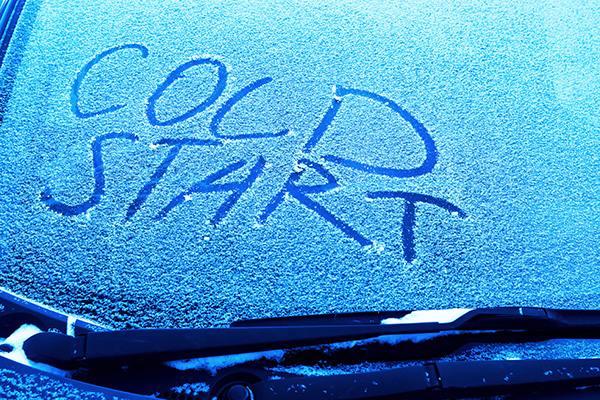
A freezing morning can turn a normal day into a scramble fast. You get in, turn the key, and instead of the usual start, you get a slow crank, a click, or nothing helpful at all. Cold weather doesn’t create brand new problems as much as it exposes weak spots that were already there.
The key is figuring out what kind of failure you’re seeing, because the next step depends on whether the engine is cranking, struggling, or not turning over at all.
Why Cold Temperatures Make Starting So Much Harder
Batteries produce less power when temperatures drop, and engines require more power to crank in the cold. Oil thickens, internal friction increases, and the starter has to work harder. At the same time, your vehicle’s electronics need a stable voltage to power modules, fuel pump operation, and ignition control.
Short trips make this worse. If you drive ten minutes at a time with the heater fan, headlights, and defrost running, the battery may never fully recover. Then one colder night is all it takes to push things over the edge.
What The First Start Attempt Tells You
Before you grab booster cables, take a second to notice what the car is doing. That pattern points you in the right direction.
If you hear rapid clicking, that often points to low battery power or poor battery connections. If the engine cranks slowly, like it is dragging, suspect a weak battery, corroded terminals, poor grounds, or a starter pulling too much current. If the engine cranks at normal speed but won’t fire, the issue is more likely fuel delivery, ignition, or air management. If you get silence and the dash lights dim or reset, you may be dealing with a bad connection or low voltage that is causing modules to drop out.
Battery And Connection Issues That Show Up In Winter
In Canadian winter conditions, the battery is the number one suspect, but the connections are right behind it. Corrosion at terminals and grounds adds resistance, and resistance steals cranking power. A battery can have enough energy in it, but the power can’t flow cleanly because the connection points are dirty or loose.
Look for white or green buildup on terminals, loose battery clamps, and crusty ground cables where they bolt to the body or engine. If the car starts only when you clamp to a solid ground point away from the battery, that can hint at a connection problem rather than a dead battery.
Fuel And Air Problems That Can Prevent A Cold Start
If the engine cranks normally but doesn’t start, don’t assume it is still a battery problem. In very cold temperatures, moisture in the fuel system can freeze and restrict flow. A weak fuel pump can also struggle more if the voltage is low and the pump is cold.
Airflow issues can matter too. A dirty throttle body, a sticking idle control strategy, or an air leak can make cold starts difficult. We also see intake boots and rubber lines that stiffen in the cold, and small cracks can open up just enough to lean out the mixture during startup.
Starter And Charging Problems That Mimic Battery Failure
A worn starter can draw excessive current, making the battery appear weak, even if it tests decent. You’ll often see dimming lights, slow crank, and a starter that sounds labored. Charging issues can also set the stage. If the alternator output is low, the battery never gets fully charged, and then winter loads finish it off overnight.
This is why replacing the battery without testing can become a repeat cycle. Sometimes the battery is the whole story, but sometimes it is the victim of another issue.
A Practical Morning Plan To Get Moving Safely
- If you’re stuck, keep it simple and avoid actions that wipe out clues.
- Turn off accessories and try one normal start attempt.
- If it clicks or cranks slowly, connect booster cables or a booster pack and wait a few minutes before cranking.
- Once it starts, drive long enough to recharge, not just a short loop.
- If it cranks normally but doesn’t start, avoid repeated cranking that drains the battery and can flood the engine.
- If you smell fuel, see warning lights that point to security issues, or the dash behaves erratically, stop and plan for proper testing.
- If it starts after boosting, treat that as a clue, not a permanent fix. The reason it needed help still needs to be found.
Get Cold Weather Starting Service in Oakville, ON with Eastside Auto Service
If your car struggles to start on freezing mornings, we can test the battery under load, inspect terminals and grounds, verify alternator output, and check whether fuel or ignition issues are part of the problem. We’ll explain what we found in plain language and recommend the next step based on what the car is showing us.
Get cold weather starting service in Oakville, ON with Eastside Auto Service, and we’ll help you start reliably even when the temperature drops.